
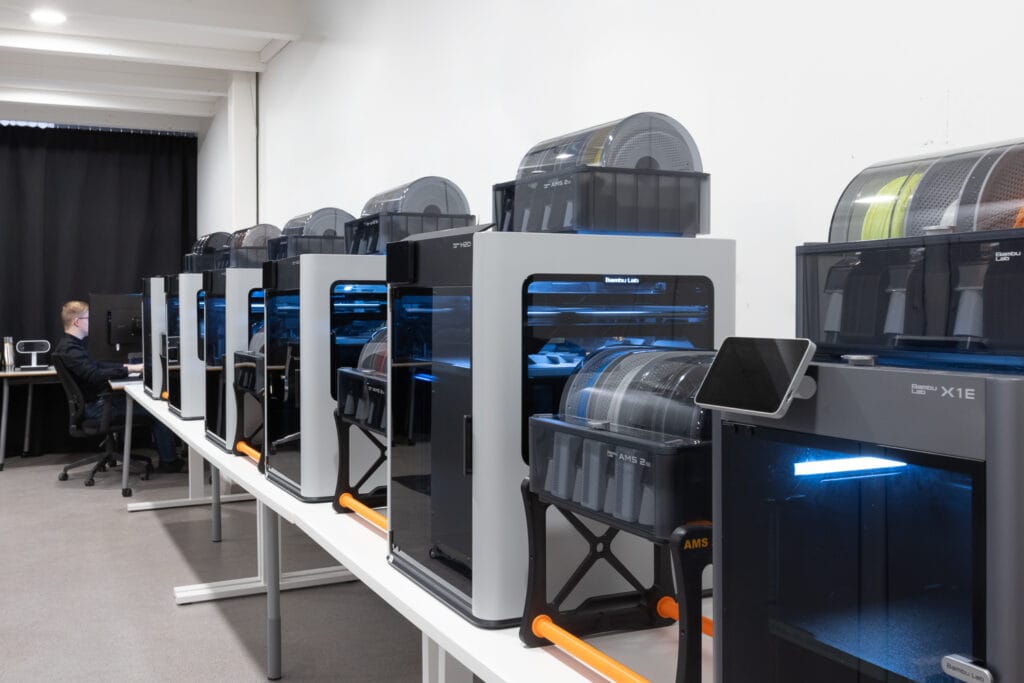
The same supply chain for the civilian and defense sectors
Technological advancements are rapidly changing the rules of the game in the industrial and security sectors.
Dual-use technology refers to technology in which the same manufacturing processes, components, or products can be used in two different industries:
• the civilian industry, which serves businesses and consumers
• the defense industry, which serves the government and the armed forces
This means that production does not need to be developed separately for multiple sectors. The result is faster and more cost-effective design and manufacturing.
3D technology is an excellent example of this, as it seamlessly serves both sectors. In practice, this means that the same design expertise, manufacturing processes, and materials can be utilized directly regardless of the industry. This eliminates the need to build separate production lines or development processes for different sectors, which significantly streamlines operations.
Why is 3D printing particularly well-suited for dual-use technology?
3D printing enables the manufacture of products directly from a digital 3D model without the need for traditional tools or expensive molds. This offers significant advantages when the same production process serves different industries.
At the heart of 3D printing is always a digital 3D model. Based on this model, the 3D printer builds the object layer by layer using the selected material. The result is exactly the desired product—and only the exact amount needed. This method reduces material waste and enables a flexible transition from one product to another between civilian goods and defense equipment without major changes to the production line.
Key Benefits of 3D Technology in Dual-Use Applications
1. Rapid product development and prototyping
With 3D printing, prototypes can be produced quickly. A digital 3D model can be tested and modified flexibly, after which the updated version is immediately ready for 3D printing. The same design solution can be utilized in both civilian and defense applications simultaneously, which accelerates time to market (or field deployment).
2. Local and decentralized manufacturing
3D technology enables manufacturing exactly where it is needed. Parts can be 3D-printed close to where they will be used, thereby avoiding long and vulnerable supply chains. This is a critical advantage, particularly in terms of operational reliability and rapid response capabilities.
3. Immediate availability of spare parts and products
In many industries, the availability of spare parts is a challenge. With 3D technology, there are several ways to address this issue:
• An old part can be 3D-scanned and reverse-engineered into a digital 3D model
• A new part can be designed directly into a 3D model based on an idea and dimensions
• The finished 3D model can be manufactured using 3D printing
The same model works in both the industrial and defense sectors.
4. Lightweight and optimized structures
3D printing enables the creation of geometries that cannot be produced using traditional methods. This opens up new possibilities for product design.
3D printing can be used to produce:
• complex shapes
• lighter and hollow structures
• multiple parts as a single piece
• material-saving structures
In 3D printing, a product is built layer by layer based on a digital 3D model. This is a form of additive manufacturing, in which the product is created by adding material layer by layer according to the 3D model.
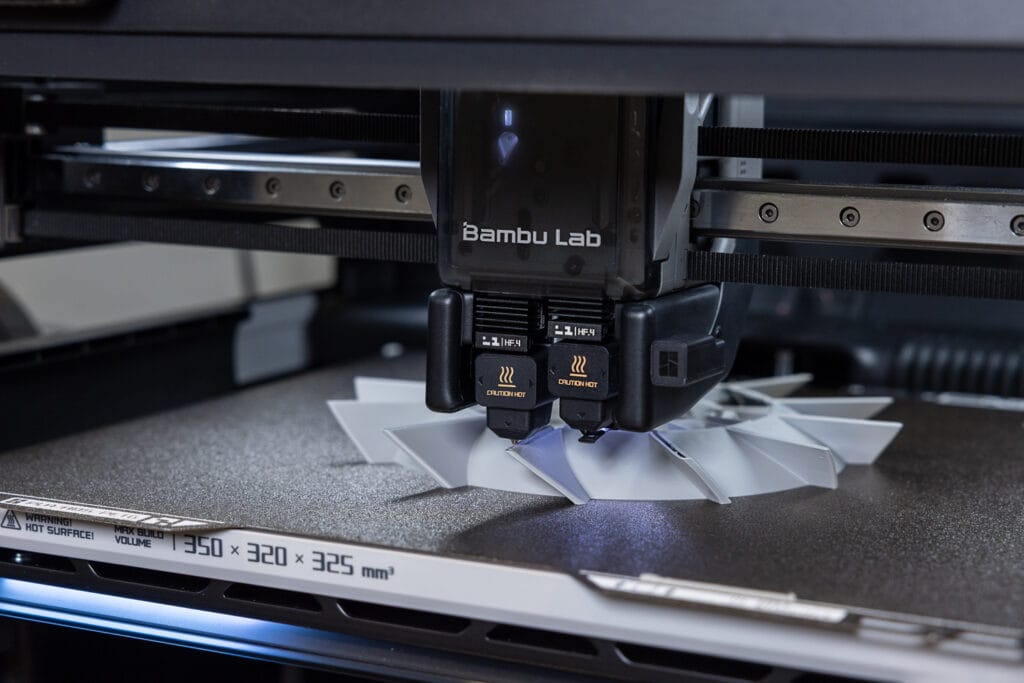
Digital production offers unparalleled flexibility
The biggest competitive advantage of 3D printing is its fully digital manufacturing process. When a high-quality 3D model of a component is available, it enables exceptionally flexible production.
Quick modifications:
The product can be quickly improved or modified without the need to manufacture new tools or molds.
Versatility of materials:
The same digital 3D model can be manufactured from different materials, such as various plastics, composites, or metals, depending on the application’s requirements.
Scalable production:
3D printing is cost-effective for everything from single pieces and prototypes to small production runs.
The digital manufacturing chain makes production highly flexible and cost-effective. This is particularly evident when customized solutions or a quick response to changing needs are required.
3D technology brings different industries together
Dual-use technology is not just a manufacturing method—it is a mindset in which the same technology serves multiple industries simultaneously. 3D technology is at the heart of this approach, as it seamlessly combines:
- 3D scanning and reverse engineering
- 3D design
- 3D printing
This comprehensive approach ensures that you get exactly the solution you need at the right time.
Product design and manufacturing are agile
Combining dual-use capabilities with 3D technology makes manufacturing faster and more flexible, while supporting domestic production. When the same technology is applied across multiple industries:
- Product development costs are decreasing
- Production speeds up significantly
- Availability of parts and components will improve
These factors make 3D technology an indispensable tool for both traditional industry and the security sector.
Do you need a 3D solution for your product?
Aline3Dhelps companies develop and manufacture parts and products by harnessing the full potential of 3D technology. We offer a complete production chain, from concept to finished product:
- 3D scanning and reverse engineering
- 3D design
- 3D printing(prototypes, one-off items, and production runs)
Streamlining product development and production using 3D technology.
Whether it’s a critical spare part, a new product innovation, or prototype development, Aliner3D can help bring your project to life—even without finished drawings, if necessary.
Contact us to schedule a free consultation – let’s explore together how 3D design, 3D scanning, and 3D printing can best meet your specific needs.
Let’s discuss your project:
0500 683 101
aliner3d@aliner.fi
Let’s build a more agile future together!